All Hail National Babysitter’s Day

(Originally published May 6, 2010 at playgroupwithsylviaplath.com)

DSC_0023 - iPhoto Edited.jpgObviously this Sunday is Mothers’ Day.  Or, as a friend of mine calls it, Mother-In-Law Day.  Certainly, you’d think that as a daughter, a daughter-in-law, a mother to three children, and a bona-fide blah-ger I’d have lots to say on the subject.  Let’s just call it a Sunday and move forward.

Or backwards as the case may be – to Saturday.  Because this Saturday is in fact National Babysitter’s Day.  Now there’s a subject near and dear to me.  It would be easy to write a tribute to all the gals – and a handful of guys – I’ve gladly paid so that I could work, go to meetings, grocery shop, eat dinner out, or even, I’ll admit, sit in my bedroom and read.

But I won’t.  Instead, because this is a “blog,” let’s talk about me.  And what I think.  And I think that knowing a babysitter, having a babysitter, and paying a babysitter is a thrillingly, freeing milestone of parenting.

There are many, many parenting landmarks that I have been or will be slow to reach.  Affording myself the confidence and luxury to hire a sitter has not been one of them.  And I mean this in all seriousness.

Certainly with a baby, hiring a sitter is an absolute necessity.  After enough weeks at home with an infant, the visiting grandparents leave and the sun stops rising and setting over the weigh-in at the pediatrician’s office.  At some point, it’s time to put on actual clothes and leave the baby behind.

Early on – and to this day – that act of handing my baby or my children over to someone else for a few hours says a number of significant things.  Perhaps most importantly to me, it means that my circle is large enough that I actually know people who babysit – or at least I know people who know people.

As a mother at home, it thrills me to count in my company high schoolers, college kids, part time cafe workers, grad students, and the neighbor’s boyfriend’s sister.  And each of these individuals makes my children’s world larger and more textured as well.  My kids will ask for the sitter who helps them make music mixes, or teaches them to string a lacrosse stick, or brings her beading supplies to share, or is king of basement floor hockey.

It’s also useful to have in my back pocket that one sitter I know they fear.  “No, no not her! She just does her homework and yells at us. We promise we’ll be good. Anybody but her.”  Obligingly, I call the favorite sitter who runs the family room dance contest, and harmony reigns for all.

I know for many parents having a babysitter creates more anxiety than it seems to be worth. And some put babysitters through “dress rehearsals” while they are still at home before they consider leaving them to do the job alone.  There are also plenty of parents who will only leave their children with family members – no outside sitters allowed.

Granted, you can only do what you are comfortable with as a parent. But, to me, such a policy drastically limits your options for freedom, and it also seems to foster a distrust and anxiety about the outside world.  Parenting is difficult enough without having to fear every tree nut, legume, shellfish and individual outside the family.

When our firstborn was several weeks old, the momentous occasion had arrived. It was time to leave  our only child with an outside sitter. As we drove away and headed to the movies, Slim asked if I knew our babysitter’s last name.  I told him I was pretty sure her first name was Kelly.

When we became parents, I had the supreme luxury of having a cousin majoring in nursing at a nearby college. Her roommates, also nurses-in-training, were the cutest, most enthusiastic bunch you could dream up – just ask my husband.  And with one call, I’d take anyone – we couldn’t go wrong.

Leaving my child with someone else meant that I had the self-confidence to admit that babies and motherhood were not all consuming and that I still had other ways to spend my time.  Paying a sitter is also the best way to free yourself from the guilt and the debilitating notion that you are the only one who can do it.  I have indeed left my children in the hands of capable 12-year-olds.

Hiring an outside sitter also serves as a much needed shot of praise and approval for a mother at any stage.  It seems to be part of the babysitter protocol to tell parents how great the kids are at the end of the job. Yes, I’m usually handing over a small stack of tens and twenties at this point, but I choose to believe they are sincere every time.  (Note: those who use family to babysit have assured me that this endorsement of one’s mothering is in no way part of the evening’s transaction.)

It is only after you’ve had a sitter a good many months and you tell her that you are writing an article for Parents Magazine about putting your baby on a schedule that she feels comfortable enough to burst out laughing.  It is at this point that you remind your sitter that she was the one who just waxed her eyebrows using your microwave.

My male babysitters bring their own special gifts and delights as well.  I’ve come home to a room of sweaty, shirtless boys lying on the floor giddily watching Tom & Jerry – including the 17-year-old sitter. One summer night, my sitter asked if I needed him the next day because he’d be back anyway to find the shoes he lost outside in a game of Manhunt.  My youngest declared one boy “the best babysitter ever” because he taught him how to shoot marbles out of his nose.  And I’m quite certain I paid forty dollars for that skill to be passed on to my children.

The actual transaction of paying a babysitter is no small issue either. Every time I hire a sitter to watch my children, I know that my family is economically fortunate.  Not everyone has such luxury. (Strangely, I’m discovering that a lot of my parenting satisfaction comes from that notion of, “it could be worse.”)

It also means that it is a service that my husband and I both feel has real financial worth.  Every time we pay someone, the unspoken message is, this is valued work that someone is paid to do.

Granted, I’m not paid to do it, but the understanding is that if I weren’t caring for our kids we would need to pay someone else to do it.  And when the subject of money and babysitters comes up in our house, I point out to Slim that there is actually a direct correlation between the number of sitter hours we pay for and his happiness.  I assure him this is not a threat or, more importantly, it is not a promise.  It is just an observation.

To observe National Babysitter’s Day I will simply acknowledge to myself the value my sitters have added to the peace, richness, and life of my family.  I will not actually be having a babysitter this Saturday, however, because my mother-in-law is coming to town.  We’ve both agreed to head into Mother’s Day with low expectations and hope to be surprised on the upside.

And so, a happy National Babysitter’s Day to me and the individuals who’ve cared for my children.  A thank you for giving me respite to breathe, for telling me I was doing a good job at valuable work, and, of course, for teaching my children to blow marbles out of their noses: Ali, Alison, Amanda, Andrew, Andrew, Angelica, Anna, Ashley, Becca, Beth, Betsy, Bobby, Caroline, Caroline, Carolyn, Chloe, Christine, Christina, Claire, Claire, Courtney, Eliza, Emily, Erin, Haley, Hannah, Hannah, Hannah, Honore, Hope, Janine, Jen, Jesse, Johanna, John, Julie, Karen, Katie, Katie, Katie, Katie, Kelly, Kelsey, Kristin, Lauren, Liam, Liam, Maddie, Maddie, Maggie, Mary, Mary, Meg, Megan, Meghan, Mikaela, Miranda, Naomi, Nicole, Patty, Ray, Rose, Ryan, Sarah, Sydney, Tara, Tayler, Taylor, Tory, Tucker, Will, and Will.


Play Ball!

(Originally published April 27, 2010 at playgroupwithsylviaplath.com)

For anyone who’s spent more than 60 seconds with me and knows the logistical paralysis I can suffer at the hands of youth sports, this will surprise you.

DSC_0051.jpg

I love Little League.  The season’s opening games happened in our town this month, and I couldn’t be happier.  Mind you, I wasn’t actually at any of my children’s opening games (see above paragraph on me and youth sports).

Certainly, I could write volumes on the benefits and evils of programs my children have participated in – from ice hockey and soccer to sailing and swimming and everything in between.  But I love Little League. Everything about it.

For one, baseball is the most storied of sports.  Writers, historians, poets and politicians have held the game up as the American ideal, the American dream, and the American spirit.  Baseball, at its best, is our national character writ large.  And in Little League, it is that character writ small.

My town’s Little League is just one of more than 7,000 around the world, in which 2.5 million boys and girls will participate this spring.  It’s grown every summer since its first in 1938 – with a few neighborhood kids and a vacant lot in Williamsport, Pennsylvania.  Fill out your form, write your check, and the hat, the t-shirt, the socks, the season, and the American dream are yours.

That’s one of its greatest appeals.  There is room for everyone in Little League, and there are no divisions for elite players, or travel teams.  Players are divvied up as equitably as possible, and the game is never a showcase for the biggest, the fastest, or the strongest.

Men such as Mark Twain, Walt Whitman, Ernest Hemingway, Stephen King, and George Will have penned paeans to the game of baseball.  They talk about the geometric beauty of the field and its near da Vincian dimensions.  They talk of the poetic perfection and the rhythm of the game’s three strikes, three outs, three bases, nine players, and nine innings.

The big league writers can have the Major League.  I’ll take on the game where boys still need help tying their cleats and girls’ uniforms hang down past their knees.  Because Little League is governed by an additional set of immutable laws, and it is precisely those rules that make me love the game.  (And any dad who chooses to quibble with my analysis, well, you can forget me as your “snack mom” next year.)

Unlike most youth sports, Little League begins with the very basics, and size, rules, dimensions, and complexity are added with each passing spring.  The game evolves as its players mature.  It is not, however, a series of checkpoints or milestones the players must pass or achieve.  It happens silently and magically over the hibernation of winter.  As a parent, this process is gloriously unceremonious.  Spring dawns and a new game awaits.

The game begins with tee ball, which any 8-year-old will tell you, is what babies play.  But it is actually where a 5 or 6-year-old kindergartner begins the baseball journey.  The ball is served up, immobile on a pedestal. The batter gets as many swings as it takes.  Every player bats every inning, and rounds every base.  (Which is why Thing Two liked to take up residence around home plate as a fielder — so that he could tag every player, every inning, every game.)  Of course, the game is always a tie.  And there are often as many adults on the field as there are off.  Kids and parents alike are learning the rhythms of the game.

In subsequent springs, tee ball gives way to coach pitch on a bigger field with real bases, an actual backstop and even a players’ bench.  But with these luxuries come the responsibility of strikes, and strikeouts, and three outs an inning.  The reality of winning and losing and the highs and lows of taking your part in each begins to settle in.

Driving Thing Three to his first practice this season, he weighed in from the back seat.  “You know there’s strikeouts this year, right mom?”

Uncertain whether to help him face his fears or boost his confidence, I asked how he would feel about striking out.  He replied, “Oh no mom, I’m not worried about me.  But have you seen David bat on my team?  I’m worried for him.”  So, perhaps the reality hasn’t set in quite yet.

Every child should know what it feels like to strike out.  And to hold in the tears as he walks back to his teammates. And every boy and girl should know what it feels like to be one of those teammates who says, “you’ll get ‘em next time.”

And one of those next times, a batter will send the ball sailing out over centerfield and a lucky kid with an open glove will hold his breath as the ball falls into the leather palm.  And every player should know the thrill of being on both sides of that ball.

Then all of a sudden one spring evening, there is a ten-year-old boy standing on that pitcher’s mound, 46 long feet from home plate.  The dads are now in the dugouts or coaching from the baseline.  The ball and the drama are handed over to boys and girls who have earned that responsibility.

It is also the year when, for the first time, a player will bobble the ball somewhere on the field and that coach on the baseline will say to his runner, “steal.”  And if you’ve watched a team of rule-following ten-year-olds suffer its very first steal, then you understand what it is to be violated.  Just another lesson from the parable of baseball.

One more lap around the bases and those boys and girls are 11 and 12 and there is a fence around that green field.  And somewhere on that fence is a big sign that says “205.”  Some days that yardage number may taunt the batter, and other days it may whisper, “you can do it.”

And that is one of the rarer and finer sites of spring – when a ball takes flight and time stops until the ball lands on the other side of the fence.  No, the lights don’t get shattered and the leather cover doesn’t fly off the ball.  But for all too brief a moment, a child will believe that he can do anything.  Achingly, it happens about the same time that as a parent, you begin to fear that child may never believe that again.

Bart Giamatti, who having been the President of Yale University and the Commissioner of Baseball, had a perfect blend of cerebral respect and awe for the game.  Many of his baseball writings spoke of the significance to a nation of young immigrants of the goal of home plate.

“Baseball is about going home, and how hard it is to get there and how driven is our need.  It tells us how good home is.  Its wisdom says you can go home again but that you cannot stay,” he writes.  He even calls on his Greek to further define baseball, “Nostos, the going home, the game of nostalgia, so apt an image for our hunger that it hurts.”

For Giamatti and other scholars “home” may be the base to return to, but for parents using Little League as one more ally in mentoring our children, “home” is surely the base we are preparing them to leave behind.

And then all of a sudden, one spring, Little League is over.  You turn thirteen and it is someone else’s turn to run the bases and rule that patch of grass.  And every year, there is a gaggle of 13 and 14 year-olds standing around the fence – decidedly not in the game, but not quite ready to take their place as spectators on the bleachers.

If you are lucky enough to watch a small boy or girl with a big dream play Little League on a sunny afternoon this spring, keep in mind my favorite baseball line from Mr. Giamatti, “It breaks your heart, it is designed to break your heart.  The game begins in the spring, when everything else begins again…”

DSC_0057.jpg


What’s The Right Age To Take A Child’s Cell Phone Away?

(Originally published April 14, 2010 at playgroupwithsylviaplath.com)

IMG_0215.jpgI realize for many, the question is usually, “What is the right age to give your child a cell phone?”

Well, in my house, that question had been easy.  With the confidence of an all-knowing parent who’d never had a preteen much less a teen, I adamantly stated my case to the women in my book club a few years ago.

“Kids with cell phones are ridiculous,” I asserted. “Mine will get it when he needs it – the same time he gets his driver’s license.”

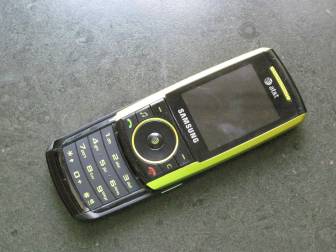
Well, imagine my surprise when I found myself in the AT&T store adding that extra phone line, making ours an official family plan as he was turning 12.

He was midway through his sixth grade year and still settling in to the ups and downs of junior high.  He had risen to the challenge of wearing the jacket and tie that sets middle schoolers apart from the “little kids” at his school.  He gladly schlepped hockey pads, squash bags and lacrosse sticks to school everyday – another signal to his immediate world that he had graduated from the elementary years.

But, despite the heavy baggage of those exterior signs of maturity, what he most wanted to symbolize that he was an independent middle schooler weighed a scant 3.4 ounces.  The cell phone.

Like in many homes where adolescence blooms, “the cell phone conversation” was a weekly occurrence.  He would insist that he was the only one without a phone.  When this argument took him nowhere, he reasoned that I could always find him if he had a phone.  I reasoned back that if I didn’t already know where my 11-year-old was, then we had bigger problems than cell phones.

I described our familiar patter to a friend, a father of two other middle school boys, “He’s acting like by not letting him have a cell phone, I’m completely emasculating him.”

“You are,” the friend replied simply.

So, living by the mantra “pick your battles,” I decided that $10 a month was a small price to pay for middle school acceptance.  Obviously, I was not factoring in insurance, texting, taxes and a phone that was more than a tin can with a string.

With that, my son became just one more of the 20 million teens bouncing their cell phone signals off towers and satellites across the American landscape.  He couldn’t have been happier standing with his peers texting after school – likely to the boy standing right next to him. On days I picked him up, he was apt to call and say, “Oh, I see your car, I’ll walk right over.”

How had we managed without this technology for so long?

Studies show that more than 70% of teens now own cell phones, up from five years ago when just 40% of kids aged 8-18 owned cell phones.  And even that number is a drastic jump compared with pre- September 11 percentages.

Before 9-11 most schools banned cell phones on campus.  “But after 9-11 and the Columbine shootings, parents wanted to be able to reach their kids all the time,” explained the head of my son’s middle school. “And now the cell phone is not going away, so we have to learn how we can use it to benefit us.”

For your benefit, here are just a few lessons learned in our year-plus with the gadget:

If your phone is in your sweatshirt on the floor of the locker room, chances are high that a skate blade will find it, thus requiring a replacement.  This is not recommended.

If you give your phone to a group of girls because they want to “program” it for you, it is entirely possible that the speaker will cease to work, thus requiring a replacement.  This is not recommended.

If you are sitting in the kitchen with your mother when her phone rings and it is your cell number that comes up, it is best to fess up that indeed you have no idea where your phone is.

If you are sitting in the car with your mother when her phone rings and it is your cell number that comes up, it is best to fess up that indeed you have no idea where your phone is.

If you decide to prevent further incidents of losing or damaging your phone and begin leaving it safely in your backpack, hockey bag, lacrosse bag, or on the kitchen counter, it becomes increasingly difficult – nearly impossible – to hear or feel your phone when your mother is calling you.  This is not recommended.

If it is your father, who ostensibly pays for your phone, calling when said communication device is stowed safely out of useful range, this is really not recommended.

In just over a year, the cell phone and its tempting trappings of responsibility and independence had become a burden.

Once again, Slim and I found ourselves having “the cell phone conversation.”  And he was the one who captured the situation best, “He can always say had a phone. He lost it and now his parents have taken it away.  That’s a credible narrative.”

Indeed, it was not a week later when the familiar chirp of his phone alerted my son that one of his people had messaged that most expressive mot, “ ‘sup?”  My youngest moaned with envy, “I can’t wait until I can get a cell phone.”

“Trust me, you don’t need a cell phone,” said his big brother. “I don’t even need a cell phone.”  And rather than try to reel his words back in or backtrack on his logic when our eyes met, he accepted and owned the truth of his statement.

He found me later and laid his cell phone on the kitchen counter, just like Charlie Bucket returning the Everlasting Gobstopper to Willy Wonka.  The evils of temptation, Slugworth and sexting had been denied in one fell swoop.

“I just think I’ll be able to relax so much more if I don’t always have to carry it with me and worry about it all the time,” he explained.  “Could you just turn it off for a few months and then we’ll try it again when I really need it?”

I’d love to say that the story ended there, we each learned our lesson and went out for ice cream.  But instead, we learned another lesson called “early termination fee.”  So, we’ll be leaving the phone on, handing our ice cream money over to AT&T and using the gadget as a “special occasion” phone.

Blanket

(Originally published April 7, 2010 at playgroupwithsylviaplath.com)

It was spring vacation and it happened.  One of every mothers worst travel nightmares.  No, there was no lurker in the airport bathroom and we survived a week of skiing with all of our bones intact.  Even all of our bags and skis made it home.

But we are short one small blue and yellow plaid cotton blanket belonging to my youngest child.  Yes, it’s his security blanket, his lovey, his transitional object, his wubby, his everything.

After spending 5 nights in a slopeside condominium, he was readying himself for bed at his grandparents’ house in Denver.  He was crouched in his flannel insect pajamas pulling out the contents of his backpack – a set of colored pencils, a “Beginning Cursive” workbook, wintergreen Lifesavers, iPod headphones, Madlibs vacation edition, neon green swim goggles, and bubblegum.

Linus-peanuts-239722_366_360.gif

“Mom, where did you pack Blanket?”

Let’s face it, if it was anyone or anything else, I would have immediately launched into my practiced monologue of, “if you want it, you pack it, you carry it.”  But this was a very young 8-year-old with freckles across the bridge of his nose looking for Blanket, without which he’d never spent a night in his life.

I froze. I had packed the bags and even checked under the beds while the family was on the mountain.  But I did not come across his blanket. It must have been left between the sheets over 100 miles away.

“We’ll find it.  We’ll call the hotel and they’ll mail it to us at home. Don’t worry.”

But I am worried.  It may not be found, and a replacement is impossible. The blanket was hand-woven by my mother-in-law while I was pregnant.  This bears repeating. The blanket was hand-woven by my mother-in-law.

Blanket has traveled with us to 26 states, 11 countries and 3 continents.  I say this not to make a pitch for Blanket as a guest star on Lifestyles of The Rich and Famous, but more as plea for leniency in the peer judgment department.

I have safeguarded the two foot square piece of cloth (did I mention that my mother-in-law wove it?) on planes, trains, automobiles, and a camel ride through the Sahara Desert.  Yet leave it to one routine trip to my native Colorado to blow my record of perfection into perfect failure.

It is said that over 60% of children develop strong attachments to a blanket, a doll, a stuffed toy or some other object during their first months of infancy.

Credit for the term “security blanket” goes to Charles Schultz and his Peanuts comic strip character Linus van Pelt, whose ever-present blue blanket debuted in 1954.

However, the phenomena of children and their attachment objects was studied and named by British pediatrician and psychologist Donald Winnicott in the early 1950s.  He asserted that a “transitional object” stands in as mother for a child fending off separation or anxiety – be it falling to sleep, when mother leaves the room, or going on a trip.

To compensate for this loss or fear, a child will imbue a soft object with the attributes of mother, comfort and safety.  As the child “transitions” from an inner world of infancy to a better understanding of self and the external world, the blanket or other object is intimately bound up with the identity of the child.

In our house, this holds true for Thing One and Thing Three. Thing Two, on the other hand, came into this world with a healthy understanding of self, independence, and I’ll call you when I need more money attitude.

I remember taking my oldest to his first movie when he was two years old, The Adventures of Elmo in Grouchland.  The film was reviewed as “perfect family entertainment… lots of nice music, jokes and warmth.”

For those of you who may have missed the 1999 release of cinematic mediocrity, the entire plot is Elmo searching for his security blanket which has been sent to faraway Grouchland – a place full of villainous people and creatures.

Hello! That’s like running a loop of child abduction films in the maternity ward.

Paul Bloom, a professor of psychology at Yale University, has studied children and their possessions, particularly their special comfort objects.  One study gave children the option of putting their belongings into a “magic” copying machine that would make exact duplicates. They would then be allowed to take their original, or the presumably “brand new” copy.

When it came to just any toy, most children selected the duplicate.  But when it came to replicating a special comfort object, some participants would not even let their “lovies” be put into the machines, and almost all of the children chose their originals.

Bloom surmises that children believe the favored object has “a hidden and invisible property – an ‘essence’ – that distinguishes it from everything else.”

And this should surprise no one.

As the horse in the nursery explained to The Velveteen Rabbit, “Real isn’t how you are made. It’s a thing that happens to you. When a child loves you for a long, long time, not just to play with, but REALLY loves you, then you become REAL.”

And Blanket was real.

More than any other possession my boy has or will ever have, Blanket was, if the psych field is to be believed, his facsimile of me.  And as his mother, I can tell you that Blanket was indeed the closest facsimile of him.

Every parent knows that hiccup of the heart when you hold the threadbare blanket, the shaggy stuffed dog, or the lumpy lop-eared bunny your child has dragged from crawling, to walking, to finally being tossed unceremoniously up the stairs as he heads out to a baseball game.

We may yell at our kids for leaving their shoes or jackets in piles on the floor a thousand times.  But as more complicated toys, heavy backpacks and sports equipment are added to those piles, the loved doll, Puppy, bunny, Blanket or Dog-Dog takes on relic status.

In analyzing possessions and what gives us pleasure, Professor Bloom explains, “Everything is either a social being or has been in contact with a social being, and so even the most mundane things have histories. This is their essence.

The first night back in his own room, I suggested to my youngest that he might want to take a stuffed animal to bed with him.  As a plush toy connoisseur, he specializes in replicas of endangered species – or at least those “on watch” – bald eagle, tiger, snow leopard, emperor penguin, polar bear, manatee, the clouded leopard, and a giant anteater.

He pulled out the panda Tai Shan from last spring break’s trip to Washington D.C. (a trip from which we did return with Blanket).

“I’ll try this tonight,” he said cheerily as he climbed into his fire engine red sheets.  “And maybe tomorrow night I’ll pick out a different one to sleep with.”

Which is how I came to realize that I am now more desperate for him to get his blanket back than he is.  I’m sure any pediatrician would tell me that my child has reached some healthy developmental milestone of self and independence.

But what the doctors have missed is that the “transitional object” goes both ways.  Because of their 8-year history together, Blanket is indeed imbued with my son’s essence.  He has made it REAL.  And I want it back.

So for now, I’m counting on Jalva Jiminez of housekeeping to return it to me.

She tells me they are behind 8,000 pounds of laundry.  And a small piece of the essence of his childhood and my motherhood is in the laundry pile.

Don’t I know it.

If A Reunion Is Supposed To Be A Celebration, Why Does It Feel Like A Minefield?

(Originally published March 23, 2010 at playgroupwithsylviaplath.com)

The email chain started a few months ago.  So many friends from my college circle lived in or around New York City, that it seemed a good idea to plan a dinner.  You know, get the band back together.  Nothing formal.  No need to wait for the university to plan it for us.

IMG_0121.jpgThe date was picked, location settled, and at least a dozen women and men planned to be there. What a treat it would be to catch up with so many acquaintances after almost twenty years.

And then the week arrived and I was nearly nauseous at the thought.

First, there was the location.  The initial email from one of the women was, “I am glad to host either at our apt or the downtown house.”  Wow, the apartment, the downtown house, (got a pool, got a pond). Good living in Manhattan.

A later email clarified, that no, my friend was not actually long on real estate, “The Downtown House” was an exclusive club where there would be a guest list, a private room and a hip downtown atmosphere.  Which, of course, made it almost worse.

The night before the dinner, the real crisis hit.  No matter the size or contents of your closet, every woman knows that paralyzing fear.  What to wear?

This particular event left me without my usual crutch of asking a friend what she was wearing.  Each of these women lived in Manhattan, and I was afraid someone was going to use the words “skinny” and “jeans” in the same sentence.

But more than where to go or what to wear, I was most anxious about what to say.

Normally, I’m the last person in the room to be short on words or self-confidence.  However, this would be an Ivy League dinner and the table would look something like this (okay, exactly like this): lawyer, doctor, lawyer, doctor, lawyer, banker, corporate VP, banker, corporate VP.  And then there was me.

And, well, “blogger” just sounds way too much like “blah-ger” or “blomit” to throw it out there with my head held high.  The word “freelance” really isn’t much of an improvement.  And once it’s been ten years, it’s probably time to drop the, “well I used to…”

Fundamentally, I knew the dinner would be great, but all I could see on my plate was a heaping portion of “I used to be somebody and now I’m somebody’s mom.”

Truly, I’m not interested in the tongue twisting debate of working mothers, stay-at-home-mothers, mothers who work at home, or mothers who would prefer to work in neither locale. The roles are not a debate to be won or lost.

Regardless, we open our conversations and make small talk with the nearest common denominator.  If you are on the baseball sidelines or one more birthday party at the go-kart park, then the line of questioning is, “how many?” and “what are their ages?”

But if you are at a cocktail party or a fundraising dinner, then inevitably “how about that rain?” will be followed with “so, what do you do?”

I realize this is intended as the most benign of questions and meant to be about as personal as the weather. But the silence seems to grow louder the longer I wait to respond. The question calls out to be answered simply with a title or a company name.  And when you have neither to supply, then it seems that a more personal question couldn’t have been asked.

This single conversation is a minefield for me every time.

But this group of people should have been different.  I’d known them half my life and we’d collectively matured into adults together.  How could they make me feel like a seventh grader heading to the middle school dance?

“Reunions are supposed to be a time to be together, celebrate life’s changes and get back in touch with each other’s lives,” explains Long Island psychologist, Linda Sapadin.  “They are not supposed to be a career contest or a beauty contest.”

Intellectually, yes, that’s an easy argument to make.  But, emotionally, reunions can feel like a checkpoint or a pit stop on life’s achievement track.

And then, Dr. Sapadin’s years as a relationship specialist and success coach come to bear as she names my affliction.  Social comparison theory.

“We don’t compare ourselves to the average person, we compare ourselves to our own social network.  How am I doing against these people I started off with, and how will they judge me?”

Sure enough, I was doing it to myself.  The morning’s visit to the orthodontist, the appointment with the gutter expert and The Downtown House conundrum weren’t enough.  I had added the universal burden of “measuring up” to my to-do list.

“Particularly people who were successful in very competitive schools seem to think they can have it all,” she explains – obviously forgetting that I have asked her for an interview, not a one sentence personal analysis.  “People take different paths in life, and all of these paths show us that you can’t have it all or do it all at the same time.”

And my path had me on an afternoon train, hurtling towards Penn Station, New York.  Surprisingly, as the dinner got closer, my anxiety began to dissipate.

First, there was a pre-drink with one of the bankers.  And what did he want to talk about? His kids and mine.

Then, while still down the street, I got an email from one of the doctors who’d already arrived at the dinner. “On the 6th floor, in some sort of David Lynch film. Food and beverages. Come.”  Oh yes, there would be skinny jeans aplenty and every flavor of uber-hip, metro-techno character at the exclusive club, but not among my people. Come.

With each new arrival to the party, there was a flurry of enthusiasm and laughs.  And it was just like Louis Armstrong’s line, “Sayin’ How do you do? They’re really saying I love you” from What A Wonderful World.  Every time someone said, “so what are you doing now?”  they were really saying, “It’s so good to see you.”

Our last classmate arrived grinning just like he used to breeze into the dining hall twenty years ago, “Hey, guys, which way’s the bar?”

Yes, the cocktail party could begin.  No flak jacket required.